Showing posts with label Style Icons. Show all posts

Wednesday, October 27, 2010

Magazines in the Spotlight: Encens


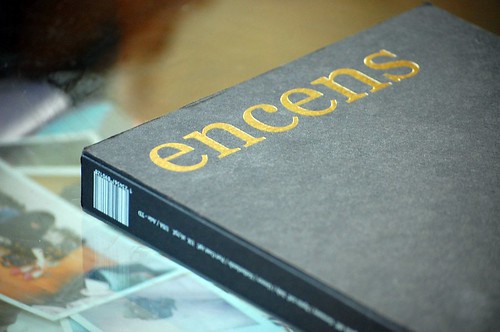
Regular readers may have noticed that it has been quite some time since our last 'Magazine In The Spotlight' post but this is not want of trying. I have been frequently and somewhat furiously finger flicking my way through the racks at newsagents and bookstores far and wide before leaving empty handed. Of course, I have encountered the usual suspects but for one reason or another these have failed to truly excite me and therefore warrant a post. I relayed my woes during a recent shopping jaunt at b Store and thankfully proprietor Matthew Murphy stepped in and offered the name of a title that had previously been unknown to me, Encens. His enthusiasm for the title was infectious. As I left the store with my purchases I instantly began my search of Soho for the publication which came to fruition at the ever reliable Compton News. Since finding it I have struggled to put it down which is no easy task given the weight of this style beast. 

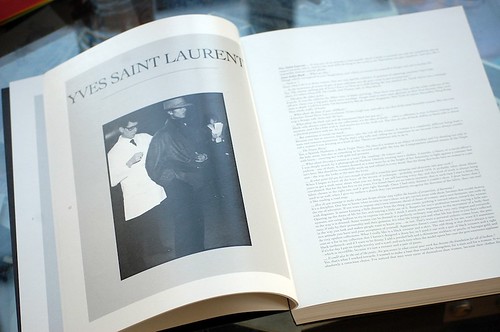
Encens number twenty six stands apart from previous issues as it signals their departure from the bi-annual format. Now published once yearly, the publication has taken on several properties which would classify it closer to a book. Firstly, the thickness and hardcover bound, its qualities as an object are just as powerful as the visual stories inside. During his Fashion Pioneers talk with Imran Ahmed, Jefferson Hack highlighted the growing importance of specialisation and what visionary science fiction author and futurist William Gibson terms mooks: “a hybrid of a book and a magazine where stories can be told in depth with beautiful photography.” Encens is undoubtedly more 'mook' than magazine. It is an exploration of the two editors, Samuel Drira and Sybille Walter, aesthetics and something of a manifesto against disposable fashion. Stylist Drira and photographer Walter share a passion for the drape and fall of clothing, a subtle tailoring and a softness of finish and form. Throughout this weighty hardback, there is an incessant delivery of their vision as opposed to a summation of the trends or season based investigations that we have come to expect from style magazines. This vision is contained is shared within everything from an interview with Yves Saint Laurent taken from Vogue in November 1983 to a celebration of the menswear design talent of Damir Doma and Kris Van Assche. Despite the temptation to scan every single page for you, I've decided to pick out a few highlights. Let the images inspire...
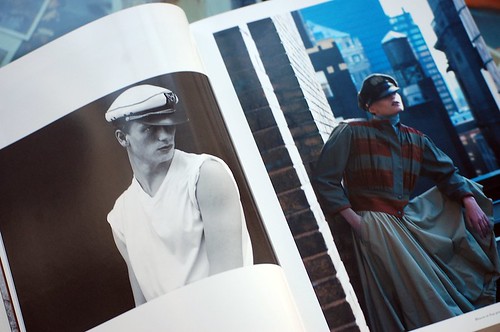
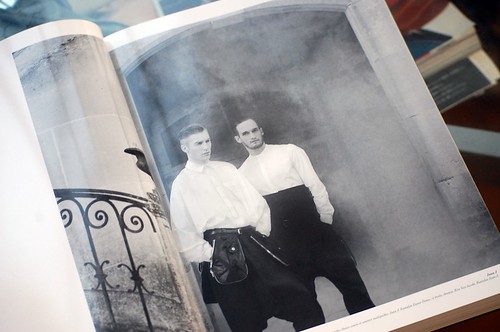
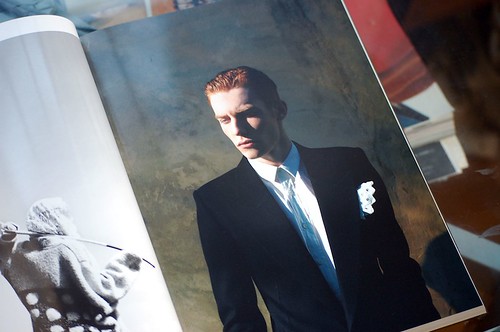
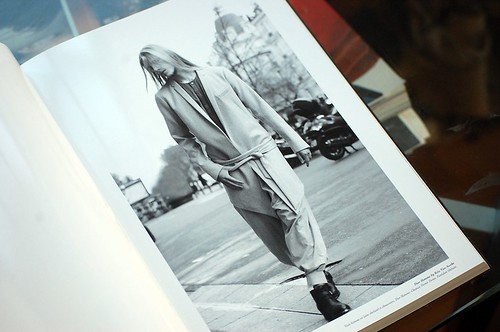
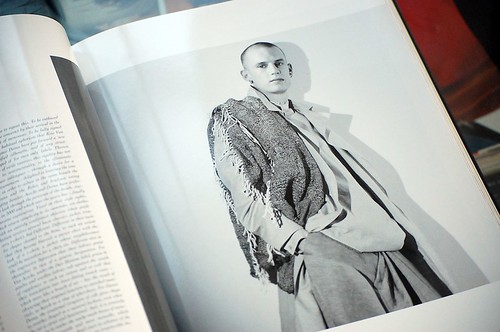

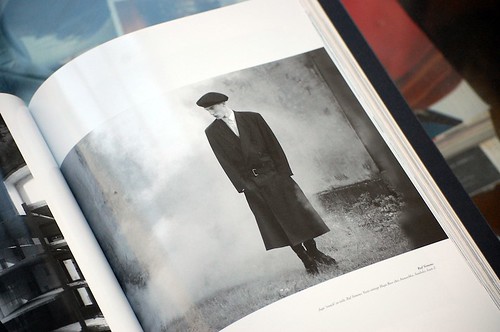
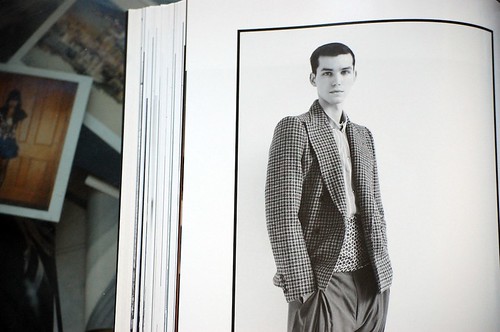
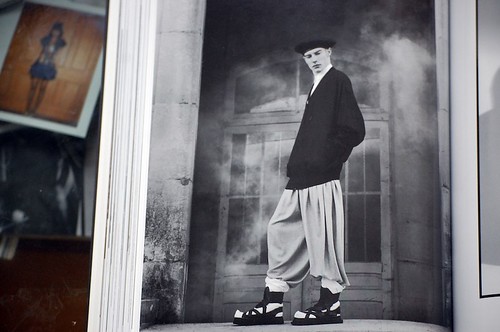
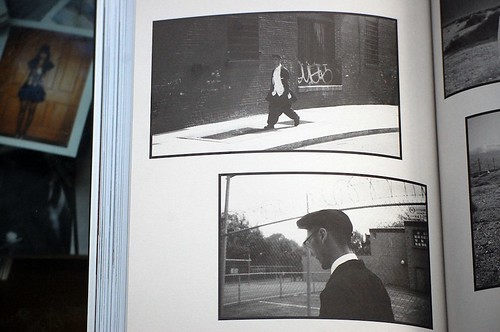
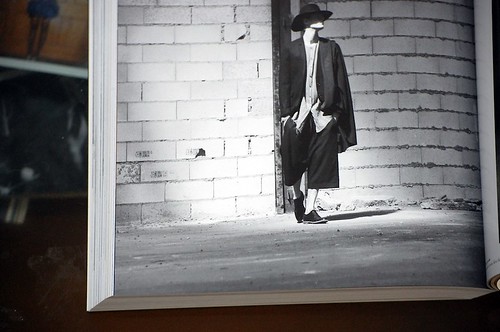
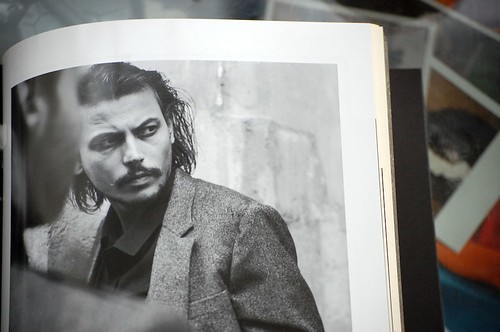

Moving back and forth from the present to the past, the editorials and features have a timeless quality. Fashion magazines tend to constantly strive forward. Even though the latest collections may have been influenced by styles or characters from yesteryear, these influences tend to be ignored. Magazines are blinkered to the past. Encens however, takes a fond gaze at the aesthetics of the past which still should have clout today. The publications stands for an independent and long terms approach. Neither Dirra nor Walter are obsessed with clothes of the moment. For them, the best fashion has three common denominators - simplicity and style but also a sense of timelessness, the capacity to either be or become a classic. In one feature they celebrate Kris Van Assche and Damir Doma, declaring their designs to be menswear at its best. A fluid silhouette, void of the typical restriction of menswear, stripped of the 'for men only' labels. Both have a desire to render the ready made boxes of menswear, sharing ideals of versatility and a nomadic existence. The following quote from Per Spook in another feature echoes these ideal...

"One of my golden rules is to be at ease in a garment. Men hate feeling confined. Likewise, discretion, rather than disguise. A man's wardrobe must have its own personality, yet not be recognisable. I have always preferred the classicism of a great simplicity, natural materials, cuts that are worn loose, and since my clothes do not have linings, they remain light and supple." Per Spook.

Encens' relevance exists in the very fact that it is not grounded in any sort of fast fashion, instead quite the opposite. Although seasonality is expected in fashion, I respect and admire anyone who turns against those implemented measures of time. I heartily recommend that you add this publication to your reading list, consider it pleasurable homework.

Thursday, August 19, 2010

Saturday Night and Sunday Morning

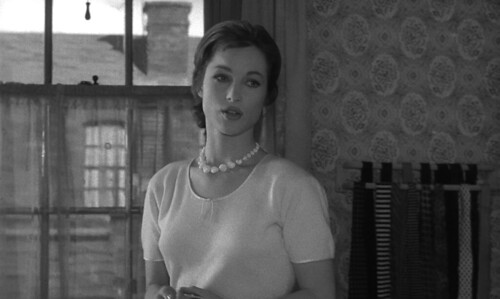
Every once in a while we receive an email to our Style Salvage inbox that brightens up our day. As you can imagine our email account is crammed full with all kinds of weird and wonderful press releases but there was one afternoon last week where we received two wide smile inducing correspondence from readers. One of which came from Louis Hunter who opened my eyes to a style rich film in Saturday Night and Sunday Morning...

----------
Hi Steve,

I'm a big fan of the blog and always look forward to the next post. Like you, I to am longing for autumn to commence as I do every year at around this time. The need to reintroduce those garments that have been in hibernation over the summer months is growing ever stronger. In response to your post on Gainsbourg a personal favorite film of mine is 'Saturday night and Sunday Morning'. I'm not sure of your already aware of it but if your ever in need of nostalgic trip to Northern England then this is perfect film especially in preparation for the cooler months ahead. The clothes of Arthur Seaton, played by Albert Finney are spot on throughout and Shirley Anne Field is not exactly hard on the eyes. I just thought I would share this with you as it is something which I very much enjoyed. Keep up the blogging as it brings us all much enjoyment,

Yours Sincerely,

L Hunter.

----------

Now, I had a vague idea that I might have watched Saturday Night and Sunday Morning during an almost forgotten wet afternoon but I couldn't be sure. Intrigued by the email, I managed to get my hands on a copy of the film, made myself some popcorn and sat down to a classic piece of 60s filmography. The film is based on Silitoe's novel in which he focuses on the life of Arthur Seaton, a young man who endures working in a factory all week so that he can afford to drink and chase women on Saturday evening.

"I'm out for a good time - all the rest is propaganda!"
Arthur Seaton

In his first starring role, Albert Finney gained international acclaim for his impressive portrayal of the rebellious factory worker. The sights and sounds of industrial Nottingham resonate with a grimy thud as Arthur Seaton works his tedious factory job. Through strong ale, women and practical jokes, he vents his frustrations against the establishments of work and marriage until his reckless ways lead him to a night that changes his life...


Clothes play a signficant role in highlighting the key themes of the film. Every Friday Seaton quickly escapes from work wearing his grubby overalls and plaid shirt before transforming in to a gentleman of the night. Seaton might still live at home with his parents in a tiny room but his wardrobe is bursting with outerwear, well cut tailoring and tie options. While offering a nostalgic trip of working class life in Northern England the Midlands the film showcases a wardrobe that is ideal for the fast approaching cooler season ahead.

Wednesday, August 4, 2010

Gainsbourg: Unlikely Style Inspiration

The very mention of Serge Gainsbourg conjures up images of a true French style icon. The swirls of smoke, the conveyor belt of beautiful women, the double-breasted jackets worn with well tailored shirts unbuttoned, the white Repetto jazz shoes or the black cuban heels, the Breitling Navitimer watch and the seemingly ever present stubble. Yes, Gainsbourg's suits and jackets were impeccably tailored, his shirts always fit just right, but it was his attitude that really defined his style. Over his exciting, inspiring and controversial career he showed that one can always wear great clothes, but superior style comes from within. So, it was with some sartorial excitement that I sat down in front of a screening of Joann Sfar's movie portrait, Gainsbourg (Vie Heroique) earlier this week. Even though the film might have lacked a coherent narrative at times, I enjoyed Eric Elmosnino's performance (an actor with an eerie resemblance to the man himself) and often found myself wishing that I would catch a glimpse of Mr Hare's Godard shoe in one of the shots...


However inspiring these style snapshots were it was during the earlier moments of the film that really left the greatest style impression on me. Sfar, who based the film on his graphic novel, boldly sites Gainsbourg's musical career in its political context and unapologetically positions his leading character's talent and complex personality in relationship to his Judaism and French antisemitism. Gainsbourg's Jewish identity is a source of tension throughout the film but it is during a look at the young musician that it is at its most significant. Our hero during his boyhood is played superbly by Kacey Mottet Klein. We see young Lucien startled by an antisemitic cartoon poster, and realising that this crude daub is supposed to refer to him and his kind. It is during these moments and his early demonstrations of rebellion that offer a more interesting style proposition...


Rather than instilling a desire to attempt a roll neck and a double breasted pinstripe jacket, in homage to one of Gainsbourg's most iconic look, Sfar's biopic left me contemplating the idea of well tailored outerwear teamed with shorts, long socks and boots. I expected to fall for the Gallic charms of Serge but found a great deal more sartorial intrigue around Lucien. Unlikely style inspiration indeed.

Sunday, January 31, 2010

Earning my stripes...

E. Tautz SS10...winning the battle of the stripes...

Cast your mind back to the end of September and you might recall that I found myself trapped between the stripes of two very different interpretations of a wardrobe staple, the Breton top. Those all too familiar signature blue and white stripes were originally the garb of French sailors and fishermen but the lightweight chambray cotton versions have since become a symbol of classic cool. The traditional loose fit, wide neck and dropped shoulders that we all know and love, caught the eye of Gabrielle Chanel during a trip to the beach, or so the story goes (as demonstrated in Coco Before Chanel), and she copied the look to kick start a fashion craze and association with style which has never really subsided. During the SS10 Menswear Day presentations at LFW my brain was torn by two incarnations of the classic Breton by E. Tautz and Sibling respectively. I ended up making the correct decision with my more classic style aesthetic winning out...

E. Tautz's Breton is hand made in Great Britain.

Before I wax lyrical about the winning effort, I have to say a few words about the effort which pushed it to right to the very last stripe. Susie loved Sibling's warped take on the Breton in particular and her enthusiasm was infectious. Sibling's knitwear pieces frequently combine timeless qualities and tongue-in-cheek references, all expertly knitted with fine gauge precision that never ceases to surprise me. For their Breton, Sibling collaborated with artist Noah Scalin (of askulladay.com) to incorporate his skull patternation into the stripes perfectly. As persuasive as this collaboration was my desire to have a more classic example of the Breton won through, it just had to to be the E. Tautz version. After placing my order back in November I patiently waited for the Welsh grannies to create my early Christmas present (to myself). Last Friday I got the email that I had been hoping for and nipped down to Savile Row to pick up the piece which had been a recurrent subject of my day dreaming (for some months). The timing was perfect because I was escaping London for a quiet weekend by the Kentish coast and the jumper made a welcome addition to my already bulging suitcase....

Breton jumper by E. Tautz, trousers by Maison Martin Margiela and brogue boots by Lodger.

In a piece on Permament Style, Simon Crompton spoke to Patrick Grant who affirmed that “the stripes on a traditional Breton sweater shouldn’t break into the neckline, The first one should start just below, right across the chest. Jerseys, and those made by machine, rarely achieve this as they are made from just a single pattern." It is easily achieved however, if like E. Tautz's version, it is hand knitted. I keep describing this as a classic example of the Breton but, there is a contemporary twist, sections taken out of the stripes on the arms of the sweater. This, like the rest of the collection demonstrates chic menswear combined with a sense of humour, a sense of Englishness that has been lost over the years. The revived house strives to make stylish clothes to which a wardrobe can be built from. Patrick hopes that in "in ten years time I'd like to think that there are customers who have built a wardrobe of E Tautz, that allows them to dress beautifully every single day of the year, whatever the weather," I'd certainly love to be such a gentlemen and build on my first piece of E. Tautz.

Braving the wind with the Breton jumper by E. Tautz and trousers by Maison Martin Margiela

As mentioned previously, the SS10 E. Tautz collection took inspiration from a set of photographs of the Duke of Windsor holidaying on the island of Mallorca in the 1930’s. Patrick Grant and his team explored the whole idea of an Englishman enjoying life on the Mediterranean in the summer and the Breton look really caught my attention. It encapsulates how well an Englishman can look abroad, the relaxed, almost nonchalant tailoring is a million miles away from the larger lout beach dwellers that come to mind today. There was one photograph in particular which inspired the Breton look above. It was of the Duke of Windsor sitting cross legged wearing a beautiful Breton jumper with rolled up ivory flannels and a pair of espadrilles. With biting winds and freezing temperatures I could not quite replicate this picture of summer serenity but I did my best. Now, comparing Westgate-on-sea during the bitter cold month of January to the Mediterranean at the height of Summer is madness but my trip did provide an opportunity to beach test my latest purchase...

In need of another layer..Custom made suit jacket by j.a.daye worn with polka dot pocket square from Muji, Breton jumper by E. Tautz, trousers by Maison Martin Margiela and brogue boots by Lodger.

Friday, January 15, 2010

The man who shot the 60s

William Burroughs (1960)

Me unwell is not a pretty sight. For the past week or so I have been feeling sorry for myself. In between sleeping too much and dashing to the toilet (too much information? Sorry!) I have been catching up on missed shows to help pass the time. One of the real highlights was BBC4's The Man Who Shot the 60s (currently on iplayer). Brian Duffy was one of the greatest photographers of his generation and part of the one "terrible trio." He defined the image of the 1960s and was as famous as the stars he photographed. However, until this show I had never heard of him. The show explores his fall from view and follows his preparation for the first exhibition of his work whilst reminding me of the sixties style that I love and showing off some favourite style icons.

Reggie Kray and grandfather (1964)

Duffy was one of three photographers who helped capture and shape the vibrancy of London in the swinging sixties. Throughout his career Duffy worked non stop, celebrity, fashion, advertising he did it all. Quickly establishing himself as one of the stars of the scene in sixties London.

Michael Caine (1964)

Throughout the 60s and 70s Duffy’s career soared as he shot close cropped images with exaggerated angles for fashion magazines, minimalist studio portraits with white backgrounds, stylish Pirelli calendars and award winning commercials. Then, in 1979, Duffy snapped. Built a bonfire and began to throw his negatives into the flames. Thankfully a number of negatives were saved but these languished in boxes until 2007. Then Duffy’s son recognised their value and began work on reminding us of his father's talent.

Sidney Poitier (1965)

With the shots of Michael Caine and Sammy Davis Jnr I am reminded of the sartorial wizard that was Doug Hayward who dressed both of these men. Hayward was the tailor of the swinging 60s. The working class hero advocated that a well cut suit can transform a man, yet you should never notice the suit but instead notice only the man. He upheld the centuries old British tradition in which male style ascends, and transcends classes.

Sammy Davis Jr and May Britt (1960)

It is difficult to talk about Duffy without situating him alongside his peers, which inevitably means David Bailey and Terence Donovan. Hopefully this show will help restore his status in this 'terrible trio.' They all helped shape a mostly mythical image of London in the 1960s, where fun and sex could be had, where dreams could come true. Still, the tailoring and style was real.

Vogue (1964)

Wednesday, September 9, 2009

The Beatles close up and private

Earlier this month we were contacted by Sergei Sviatchenko who alerted us to his on-going style project, Close up and private. We love how it celebrates classic details alongside contemporary looks through a unique form of photographic documentary. The real beauty of menswear is in the details and this style project celebrates them. With this is mind Sergei has sent through his latest spread of images, an homage to the Beatles...

Fans of The Beatles will know that their back catalogue has finally been digitally remastered and is due for release today along with Beatles: The Rock Band. To celebrate this fact, Sergei sent through his pictorial homage to the band. Although we are fans of the fab four's music (who isn't?) we've never really appreciated their style. This series of images forces us to readdress this point and might make you look at the mop top and mod style a little differently. So why not sit back with your favourite Beatles' track (Steve's is Blackbird from The White Album and EJ's changes constantly but is currently 'Michelle' from the Rubber Soul album) and let the images wash over you...

From the very beginning, The Beatles recognised the importance of style and were constantly reinventing their look along with their music. Dark suits soon gave way to lighter, Edwardian style, collarless ones. When The Beatles took to the world stage in the 1960s, they sported an unusual mix of smart suits and shaggy, moptop hair. At a press conference at the Plaza Hotel in New York, shortly after the Beatles' arrival in the United States, Harrison was asked by a reporter, "What do you call your hairstyle?" He replied "Arthur." A suitable name for it, don't you think?

The band's mod suits were among the defining looks of the 1960s and have been coming back in to fashion ever since. The Beatles' in-house tailor was a Londoner called Dougie Millings, who made many of their early stage suits. Millings apparently took the idea of collarless jackets from similar suits created in 1960 by Pierre Cardin.

John Lennon's round glasses were a defining element of hippie style during the 1960s counterculture movement. Of course to contemporary eyes they have more than a hint of Harry Potter about them but these classic, simple, round wire frames never really go out of style.

This is one of our favourite shots because we are picturing an army of lust fuelled teenage girls making chase out of the shot. The 'Beatle Boots' like the ones above are a direct descendant of the Chelsea boot (from which the pointed toe and centre seam stitch was derived) and the Flamenco boot (from which the Cuban heel was derived). The boots originated in October 1961, when John and Paul saw Chelsea boots whilst browsing in Anello & Davide. The pair consequently commissioned four pairs (with the addition of Cuban heels) for the band. The 'Beatle Boot' created queues of 'Mods' outside the Drury Lane shop, and has been in popular demand ever since.

The way Close Up and Private highlights men's style in a personal way makes this a refreshing find and one which will surely provide hours of procrastination fodder.